
The Rules of Robert the Doll: Permission, Photos, Curses and the Truth Behind the Legend
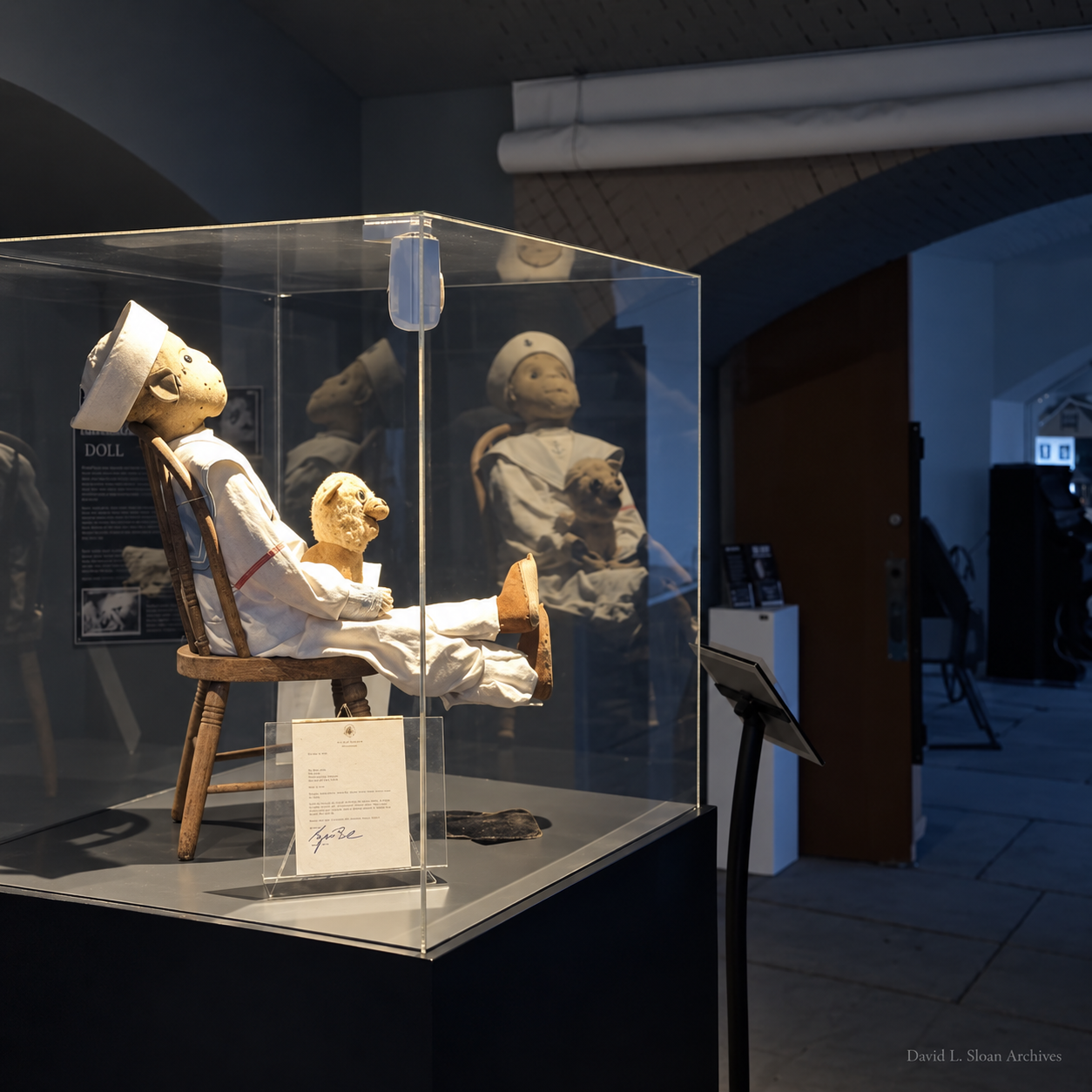
Robert the Doll in his protective display case at Fort East Martello Museum in Key West.
Spend any amount of time looking up Robert the Doll online, and you’ll eventually run into the rules. Ask permission before taking his photo. Introduce yourself. Say goodbye when you leave. Never disrespect him. Some people now claim you even need to apologize if Robert’s picture appears unexpectedly on your phone or computer.
Different versions exist depending on which website, video, tour guide, or social media account you find, but most people don’t realize one thing about Robert’s famous rules.
They were created by humans.
I’ve spent more than 30 years researching Robert, documenting his history, and experiencing some very strange things around him. I have no doubt Robert is powerful, but the elaborate set of rules surrounding him today didn't exist when I first uncovered his story in 1996 and started sharing it with the world.
What did exist were camera problems.
How the Photo Rule Started
The tradition of asking Robert’s permission before taking his photograph started around 1997, when most people still used film cameras and years before everyone carried a cell phone in their pocket. Visitors began reporting strange problems while trying to photograph Robert. Camera batteries that had been working perfectly would suddenly die. Sometimes pictures of Robert didn’t turn out. In a few of the stranger stories, Robert appeared on the developed film while the other photographs on the roll were missing or ruined. This happened often enough that people started wondering whether Robert simply didn’t like having his picture taken.
Someone eventually suggested treating him the way you might treat a living person and asking whether it was okay to photograph him. As Robert became one of the primary reasons people visited the museum, staff began passing the suggestion along to visitors.
Ask Robert before you take his picture.
It was simple, memorable, and it made for a great story. Before long, the suggestion became part of the Robert experience.
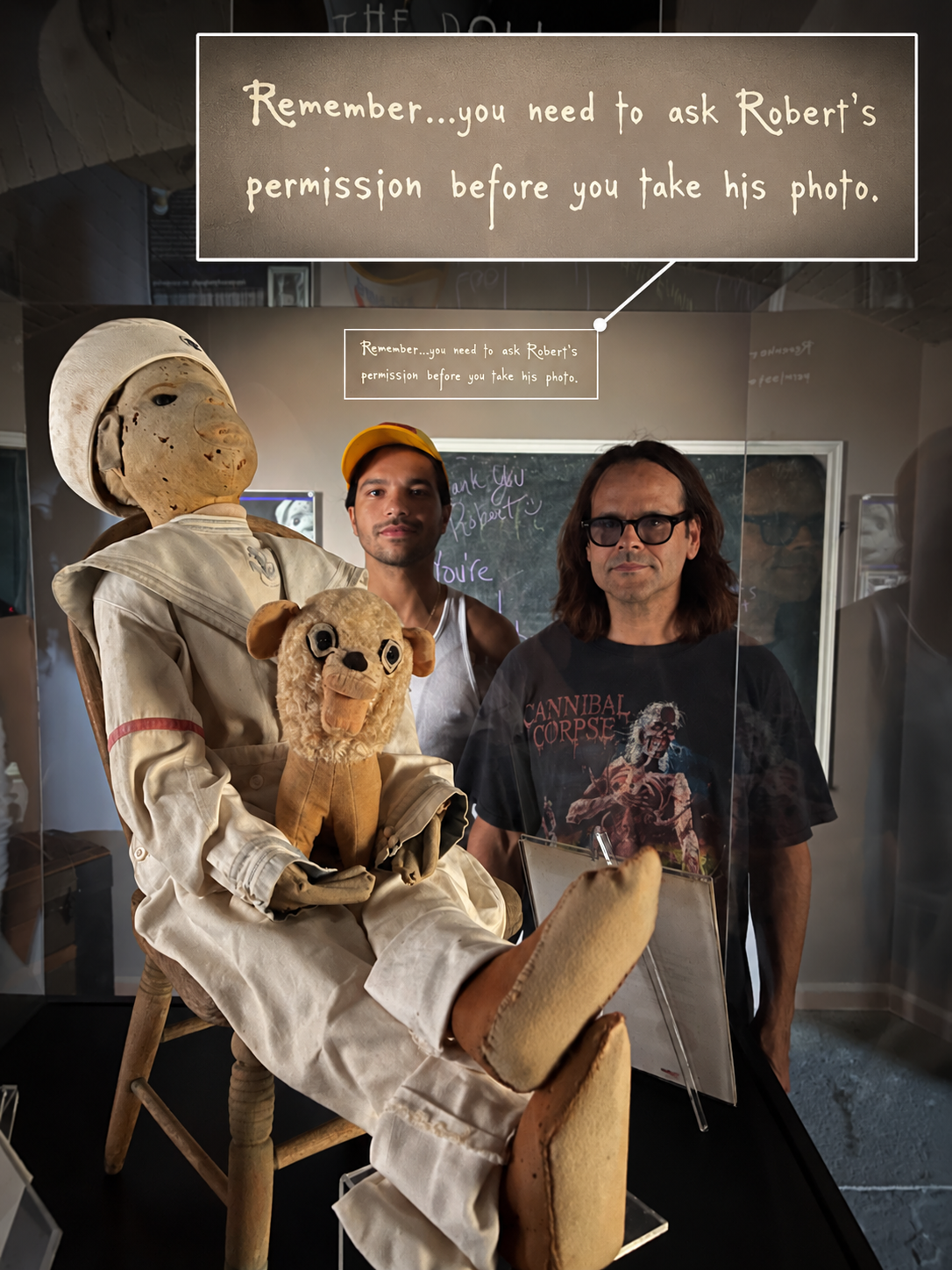
Screenwriter and producer, Diomedes Raul Bermudez, visits Robert the Doll. Behind him is Robert’s famous rule.
When a Suggestion Became a Commandment
It is also worth remembering that many of the people promoting Robert’s rules over the years worked in entertainment and tourism. They weren’t paranormal investigators studying Robert under controlled conditions. Their job was to tell a good story and give visitors an experience they would remember. At one point, a local trolley company was bringing guests to the museum specifically to see Robert and helped renovate his casemate. As part of the new display, a message was stenciled directly on the wall:
“Remember... you need to ask Robert’s permission before you take his photo.”
Once that was written on the wall next to Robert, the suggestion suddenly carried a lot more weight. It was almost like one of the Ten Commandments. If it’s written on the wall, it must be true. From there, the rules grew. People were told they should introduce themselves to Robert. Others said you had to say goodbye when you left. Different tour companies, television shows, websites, YouTube channels, and social media accounts added their own versions until Robert seemed to have his own rules of order.
Depending on who you ask, there may be three, five, seven, or more rules. Robert never had an original list. The rules developed over time through storytelling, tourism, entertainment, repetition, and the natural growth of a legend. That doesn’t make them unimportant. Quite the opposite. The evolution of the rules has become part of Robert’s history, and Key West has always been a place where history and legend blend together.
Do You Really Need Robert’s Permission?
Personally, I don’t believe you need Robert’s permission before taking his photograph. In fact, after decades of paranormal investigation, I’m cautious about asking unknown entities for permission. When you ask permission, you may place yourself in a subordinate role by suggesting something else has authority over what you may or may not do. I’m not sure that is a position you want to put yourself in when dealing with something you don’t completely understand.
What I have found during my 30 years with Robert is much simpler: Respect matters.
People who treat Robert respectfully rarely seem to have problems. You don’t need to memorize a ritual, introduce yourself with the right words, or worry that you forgot to say goodbye on the way out the door. Just treat him with respect.
Or, to put it another way, don’t be a jerk.
Can Robert Curse You Through a Screen?
This is where the legend becomes especially interesting, because the internet took the original photography story and carried it somewhere no one could have imagined in 1997.
Today, you’ll find warnings that Robert can curse you through a television, computer, or phone screen. Some people insist that if you see Robert’s photograph unexpectedly, you need to apologize. Others warn viewers before showing his image so nobody accidentally looks at him without permission.
You can see how the story evolved. First, cameras malfunctioned around Robert. Then people were told to ask before taking his picture. Eventually, that became the idea that viewing a picture without permission could also cause problems. CreepyPasta, YouTube, TikTok, and social media have all played a part in expanding Robert’s legend, and that is now part of his story whether anyone likes it or not. Legends have always grown this way. The internet just allows them to grow much faster.
The screen curse also makes a great story, so I don’t expect it to disappear anytime soon.
Still, something else is worth considering. Millions of people have seen photographs and videos of Robert, and millions of people experience bad things every day. Cars break down. Flights get canceled. Relationships end. People get sick. Phones stop working. Unexpected bills arrive.
When something bad happens shortly after someone encounters Robert, it's easy to connect the two events.
I have experienced far too much around Robert to dismiss the possibility that something unusual is going on, but we also have to remember that things we perceive as bad happen to everyone. Sometimes it is easier to blame Robert than to accept the ordinary rules of the universe.
What About the Apology Letters?
Robert has received countless letters over the years from people who believe they suffered bad luck after disrespecting him. Some apologize for taking his photograph without permission. Others admit they mocked him, laughed at him, or didn’t believe the stories until something went wrong in their lives.
Whether Robert caused any of those things is impossible to prove, but the letters themselves are real, and they have become one of the most fascinating parts of his modern history. They also show how far the original photography tradition has traveled. What began with malfunctioning cameras and a suggestion to ask before taking a picture eventually became an international legend about curses, apologies, and bad luck.
That evolution is part of Robert now.
So, Is Robert the Doll Really Cursed?
I’m not sure “cursed” is the word I would use.
I have no doubt something powerful is at work with Robert. I have spent enough time with him and experienced enough strange things over the past 30 years that I don’t dismiss what happens around him for one second. But I also don’t believe Robert is sitting in his case keeping track of whether every visitor introduced themselves correctly or remembered to say goodbye.
Robert’s story has always existed somewhere between documented history, personal experience, folklore, and legend. The camera problems led to the permission story. The permission story became a tradition. Tourism and entertainment helped turn the tradition into rules. The internet amplified those rules, and social media carried them around the world.
All of that is now part of Robert’s story, but after 30 years with Robert, I’ve found it all boils down to respect. You don’t need to fear Robert. You don’t need to perform a ritual every time you see his photograph, and you certainly don’t need to panic because his picture suddenly showed up on your phone.
You do need to treat him with respect.
Meet Robert After Dark
Robert lives at Fort East Martello Museum in Key West. During Robert the Doll After Dark, guests enter the historic fort after the museum closes and experience Robert in a way daytime visitors never can.
Learn more about Robert the Doll After Dark and meet Robert for yourself.
About the author:
David L. Sloan is the author of Robert the Doll: The True Biography and has researched and worked with Robert for more than 30 years.
Learn more about David Sloan.
