
Robert the Doll
The True History, Legends & Hauntings
of Key West's Most Famous Doll
Based on three decades of research by Dolltender David L. Sloan, author of Robert the Doll: The True Biography of Key West’s Haunted Doll.
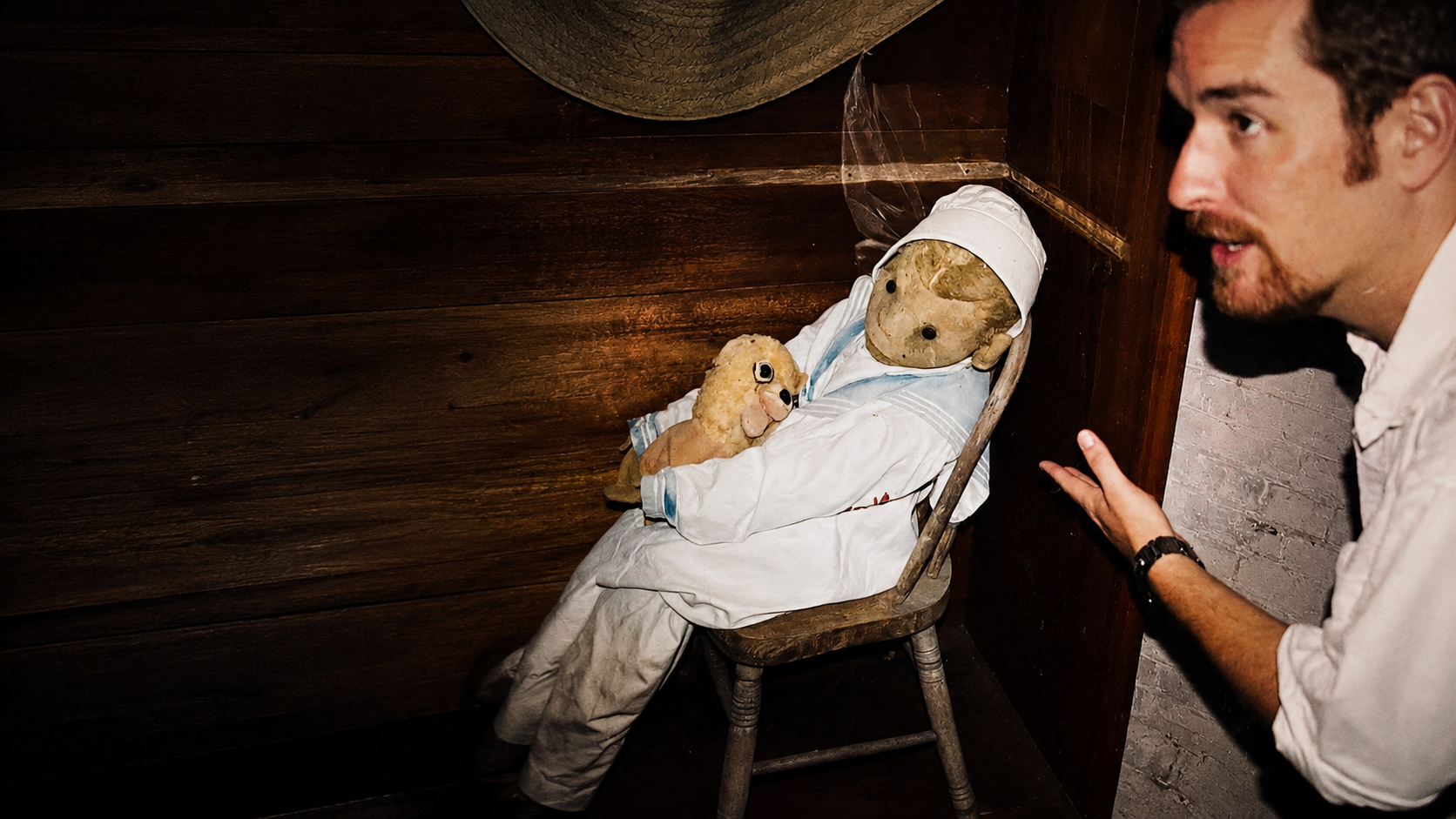
David L. Sloan with Robert the Doll at Fort East Martello, 1996, shortly after Robert was placed on public display.
Who Is Robert the Doll?
Robert the Doll is one of Key West’s most enduring mysteries. Made by the Steiff Company of Germany, he came into the life of a young Robert Eugene Otto in the early 1900s and remained part of the Otto family story for decades. Today, Robert resides at Fort East Martello Museum, where visitors from around the world come to see him.
Over the years, stories have credited Robert with moving on his own, changing expressions, causing unexplained events, and bringing misfortune to those who disrespect him. Thousands of people have written letters asking his forgiveness. But the folklore surrounding Robert has also become tangled with myths, exaggerations, and stories repeated so often that people now treat them as fact.
This page separates documented history from legend, tracing Robert’s story through historical records, firsthand accounts, and three decades of research.
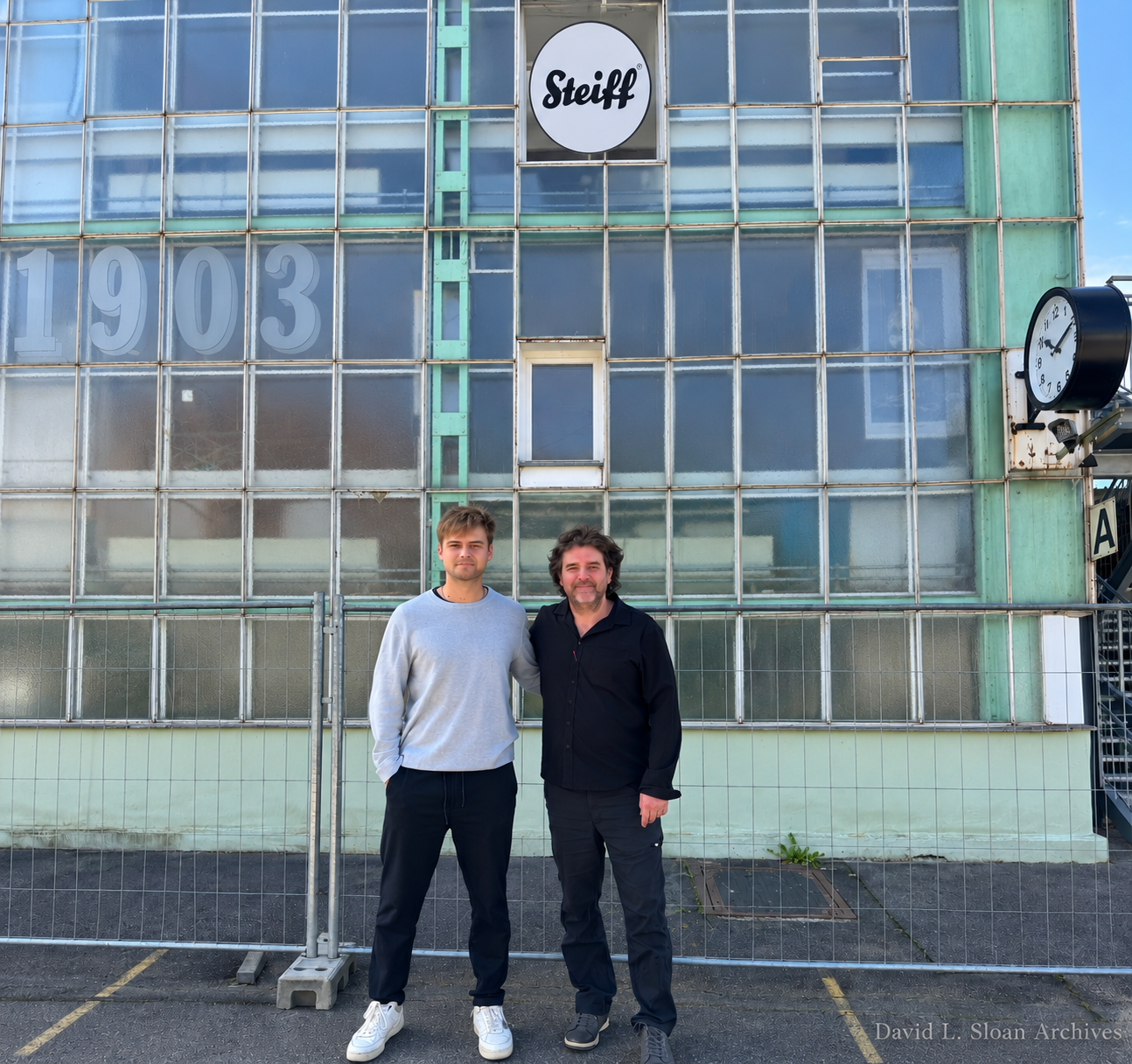
David L. Sloan at the historic Steiff factory in Giengen, Germany, with Steiff America Managing Director Felix Oeding-Erdel during research into Robert the Doll’s origins.
The Documented History of Robert the Doll
From Germany to Key West
Robert was made by the Steiff Company of Germany and came to Key West in 1904, when Minnie Otto brought the doll home for her four-year-old son, Robert Eugene Otto. The boy quickly became attached to the doll and gave it his own name, Robert. From then on, he was known by his middle name, Eugene.
Stories about Robert began during Eugene’s childhood. Family members reportedly heard Eugene talking with the doll behind closed doors and believed they sometimes heard a second voice answering him. When strange or troubling things happened, Eugene was known to blame Robert. Over time, neighbors and members of the household came to believe the doll possessed unusual qualities.
When Eugene left Key West as a young man, Robert remained behind in a cedar chest at the Otto family home at 534 Eaton Street. Eugene later studied art in Paris, married concert pianist Annette Parker, and spent years living in Europe and New York before returning to Key West in 1945.
Back at the Eaton Street house, Eugene resumed his relationship with Robert. He placed the doll in the window of the home’s turret room while he painted, and local residents later recalled seeing Robert there. Stories soon spread that the doll changed position or moved when no one was near him.
After Eugene: Myrtle Reuter & Robert’s Second Home
When Eugene Otto died in 1974, Robert’s story did not end with him. The Otto home was eventually sold to Bill and Myrtle Reuter, and Robert remained with the property.
Myrtle developed a remarkable attachment to the doll. After she and Bill divorced in 1980, Myrtle took Robert with her to a new home at 1722-A Von Phister Street in Key West, beginning a lesser-known chapter in Robert’s history.
During the years Robert lived with Myrtle, strange stories continued to follow him. Myrtle later told museum staff that Robert was haunted and described frightening incidents in her home, including one in which she believed Robert had prevented her from leaving a room by holding the door shut.
In 1994, Myrtle donated Robert to the East Martello Museum. At the time, he was still largely a piece of obscure Key West folklore. Within a few years, that would change dramatically.
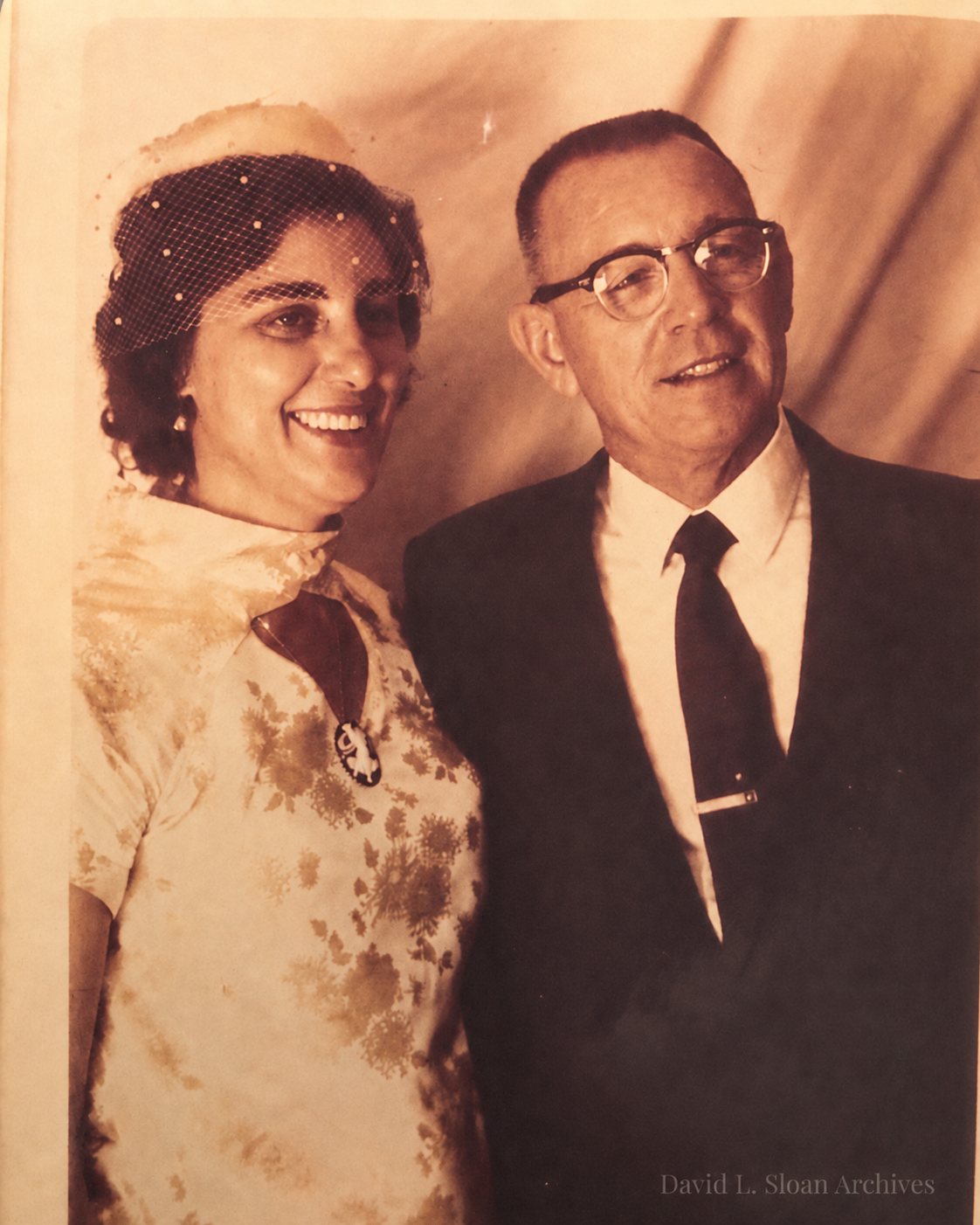
Bill and Myrtle Reuter, who became Robert’s caretakers after the Otto family era. Myrtle donated Robert to the Fort East Martello Museum in 1994.
Robert Comes To
Fort East Martello
In 1994, Myrtle Reuter donated Robert to the East Martello Museum in Key West. Although she told museum staff that the doll was haunted, Robert was not immediately placed on regular public display. For a time, he remained a little-known object in the museum’s collection.
That began to change in 1996. Key West author and ghost tour operator David L. Sloan became fascinated by Robert’s story and began encouraging guests on his tours to call the museum and ask to see the doll. As interest grew, Robert was placed on display and began attracting visitors specifically to see him.
Sloan continued researching Robert’s history, tracing the Otto family, examining the stories that had accumulated around the doll, and searching for the legends' origins. What began as a largely forgotten piece of Key West folklore gradually became one of the island’s best-known supernatural stories.
Over the years, Robert’s reputation spread far beyond Key West. Visitors began arriving from around the world, television crews followed, and letters addressed to Robert poured into the museum from people asking forgiveness for disrespecting him or blaming him for misfortune in their lives.
Robert the Doll had entered his modern era.
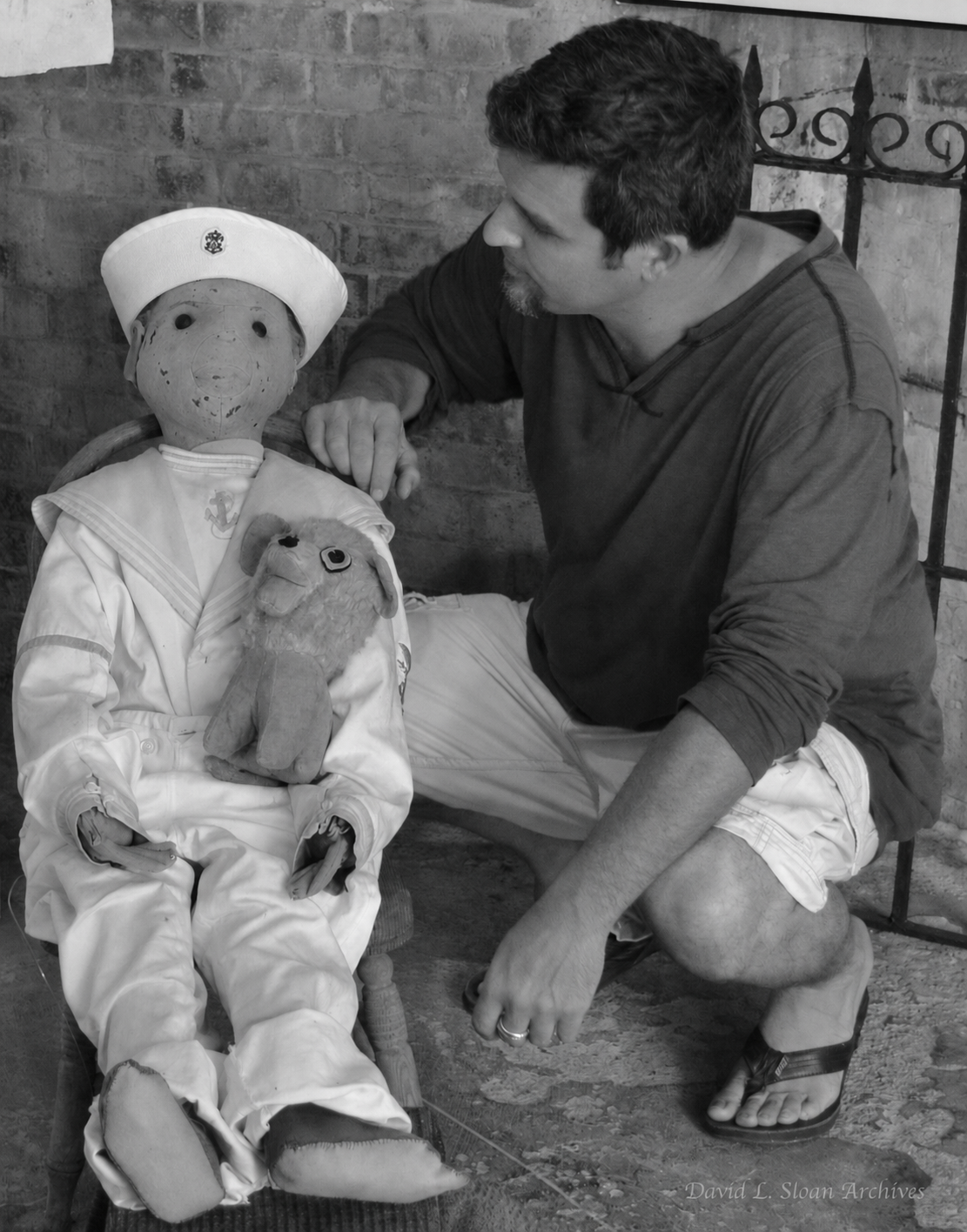
David L. Sloan with Robert the Doll inside Fort East Martello Museum during the early years of Sloan’s research.
History VS Legend
Where The Facts End & The Folklore Begins
More than a century of storytelling has transformed Robert the Doll’s history. Some stories trace back to documented events and firsthand accounts. Others were embellished over time or changed dramatically as people repeated them.
After three decades of research, we can now separate much of Robert’s story into three categories: what legend says, what the historical record supports, and what years of paranormal investigation suggest may be happening.
Case File 01
The Angry Nanny
The Legend
An angry nanny gave Robert to young Eugene Otto and cursed the doll.
One of Robert’s most frequently repeated origin stories claims that a disgruntled servant made the doll for Eugene and used voodoo or other magic to place a curse upon it.
What the Research Shows
The “angry nanny” appears to have been based on a real woman named Emmeline Abbott.
A servant did not make Robert by hand. Research into the doll’s physical origins leads instead to the Steiff Company in Germany.
But the woman at the center of the later folklore was not necessarily fictional.
Emmeline Abbott was connected to the Otto household and worked for Dr. Thomas Otto. Around the time Robert arrived at the Otto home in Key West, Abbott suffered the loss of a child.
Evidence also suggests her relationship with the Otto family became strained. Otto family correspondence refers to Abbott as a problem, and following Thomas Otto’s death, she filed a lawsuit against the family. The surviving material does not reveal what the lawsuit concerned, but it confirms that genuine conflict existed.
Over time, those events may have survived in distorted form as the story of an unnamed angry nanny who cursed Eugene’s doll.
What We Believe May Have Happened
Emmeline Abbott’s child may be an important part of Robert’s paranormal story.
One theory emerging from the research is that Abbott blamed Dr. Otto for failing to save her child and that the anger remembered in the folklore originated with that loss.
We also believe it is possible that the spirit of Abbott’s child became attached to, or entered, Robert around this period.
No historical record can prove such an event occurred. But the theory offers an intriguing possible connection between the documented tragedy surrounding Emmeline Abbott and the childlike presence long associated with Robert.
Case File 02
Does Robert Move?
The Stories
Robert moves. His expression changes. His eyes follow visitors. Some people have even seen him appear to breathe.
Reports of movement have followed Robert for generations. Some witnesses describe dramatic changes in position. Others report subtler experiences: Robert’s eyes seeming to track them, his facial expression changing from one moment to the next, or the unmistakable feeling that something about the doll has changed.
During Robert the Doll After Dark experiences, guests have also reported seeing movement in Robert’s chest that resembles breathing.
What the Reports Show
Stories of Robert moving are not confined to one period of his history.
Accounts begin with the Otto household and continue through Robert’s years with Myrtle Reuter, his time at Fort East Martello, and modern encounters with museum visitors and paranormal investigators.
Individual experiences cannot be proven in the same way that a photograph, letter, or historical record can be documented. But the persistence of these reports across generations is one reason Robert’s apparent movement remains central to his story.
What We Believe May Be Happening
Robert may not be associated with only one spirit.
After years of investigating Robert, our working theory is that different spirits may enter and leave the doll.
Some apparent movement may occur during those transitions.
For a brief instant, a witness may perceive both the physical doll and the spirit entering or separating from it. The overlap could create the impression that Robert has shifted position, moved his eyes, changed expression, or momentarily come alive.
It may also help explain why Robert can appear remarkably different from one encounter to another.
We cannot prove that this is what witnesses are seeing. This theory developed over years of observing Robert and comparing the experiences of people who encounter him.
Case File 03
The Curse Of Robert The Doll
The Legend
Disrespect Robert and something bad may happen to you.
Robert has been blamed for accidents, illness, broken relationships, lost jobs, travel problems, and countless other misfortunes. One of the best-known traditions surrounding him is the belief that visitors should treat Robert respectfully and apologize if they believe they have offended him.
What We Know
Whatever someone believes about Robert’s ability to cause misfortune, one part of the curse story is unquestionably real:
People write to him.
Robert has received thousands of letters from people around the world describing bad luck they believe began after an encounter with him. Many ask Robert for forgiveness and plead with him to remove whatever curse they believe he placed upon them.
Some accounts are frightening. Others are surprisingly personal. Together, they have become part of Robert’s continuing history.
What We Believe
There is no scientific way to establish that Robert causes the events attributed to him.
But after decades of hearing stories directly from visitors, receiving apologies, and investigating activity surrounding Robert, we do not dismiss the experiences simply because they cannot be explained.
Whether Robert creates bad luck, responds to disrespect, or becomes a focus through which something else operates remains an open question.
The letters are real. The experiences are real to the people reporting them. What causes them remains part of Robert’s mystery.
The documented history tells us where Robert came from.
The unexplained experiences are what keep his story alive.
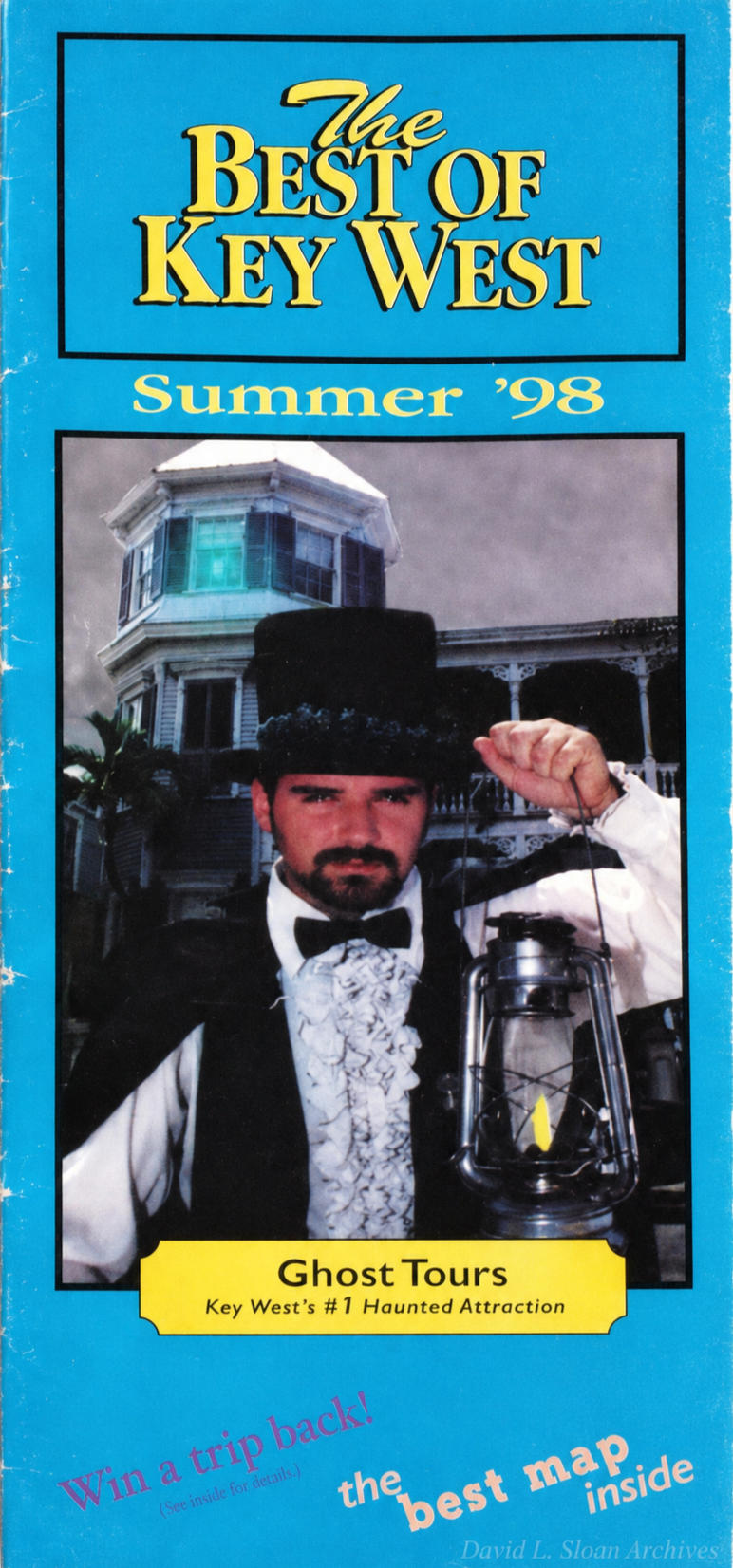
David L. Sloan in front of Robert the Doll’s former home at 534 Eaton Street, featured on the 1998 Best of Key West guide during the early years of Robert’s modern publicity.
How Robert Became Famous
From A Key West Ghost Story To An International Icon
When Robert the Doll went on public display at Fort East Martello in the 1990s, few people outside Key West knew his story.
Robert’s modern publicity began with Key West author and ghost tour operator David L. Sloan, who started researching the doll in 1996 and sharing Robert’s story with guests on his nightly ghost tours. Sloan encouraged visitors to contact the museum and ask to see Robert, helping create the first wave of public interest in the previously little-known doll.
Before television crews, documentaries, and social media, Robert’s story spread one ghost-tour guest at a time.
The First National Attention
In 1997, a producer from the nationally syndicated television program Strange Universe heard about Robert and contacted David L. Sloan to collaborate on a feature about the doll.
The resulting segment gave Robert some of his earliest national television exposure and helped generate additional media interest. Travel Channel followed, and Sloan continued introducing Robert’s story to wider audiences through television, radio, and interviews, including an early appearance on Coast to Coast AM.
As Sloan continued researching Robert, he also began uncovering the doll’s true history, including identifying Robert as a Steiff creation from Germany and separating documented fact from the folklore that had grown around him.
At the same time, Robert’s reputation was spreading throughout Key West. Other local ghost tours began incorporating his story into their own tours, helping transform Robert from an obscure museum object into one of the island’s best-known supernatural legends.
Robert Enters The Paranormal Mainstream
By the 2000s, Robert was no longer simply a Key West ghost story. Paranormal investigators, television producers, and enthusiasts nationwide knew his name.
In May 2008, Robert left Key West for the first time in his then-104-year history to appear at TAPSCon in Clearwater, Florida, a convention hosted by The Atlantic Paranormal Society. The trip marked an important milestone: Robert had become part of the broader paranormal world.
In 2013, Sloan filmed a segment with Jack Osbourne at Fort East Martello for a program exploring the Dry Tortugas' ghosts. During that visit, Sloan told Osbourne about Robert and his unusual history.
Jack later returned to Fort East Martello with his father, Ozzy Osbourne, for Ozzy & Jack’s World Detour. Their encounter with Robert became one of the doll’s most widely seen television appearances.
Robert Becomes A Major Key West Attraction
As Robert’s fame grew, so did the number of visitors arriving at Fort East Martello specifically to see him. By the following decade, commercial ghost-tour operators were bringing guests to the fort as part of their experiences. Ghosts & Gravestones was among them beginning around this period.
The trolley no longer visits Fort East Martello, although its former association with Robert still causes occasional confusion today.
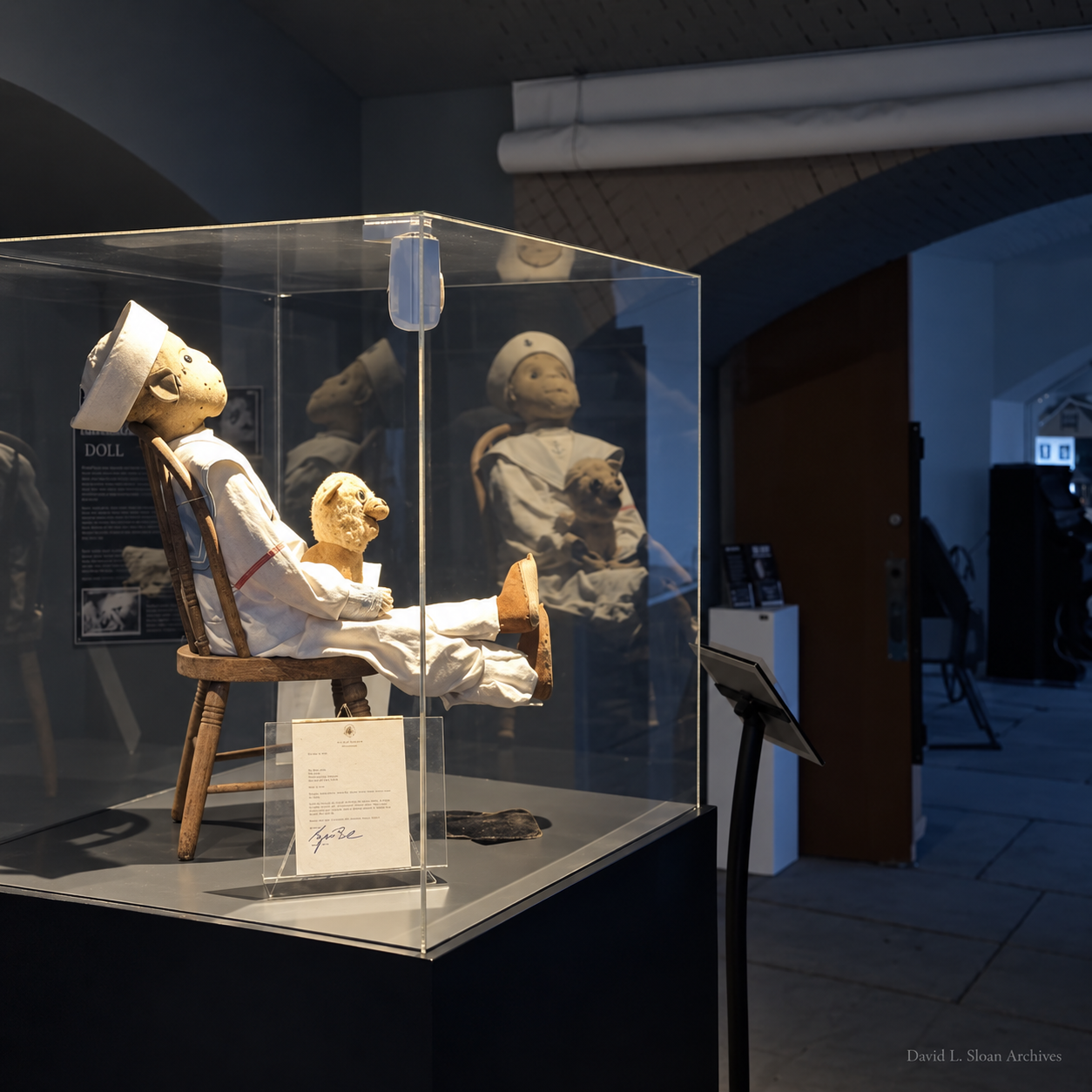
Today, visitors can see Robert at Fort East Martello during regular museum hours, while after-hours encounters are offered separately through Robert the Doll After Dark.
The World Comes Looking For Robert
By this point, Robert no longer needed an introduction to the paranormal world. Television producers, investigators, celebrities, filmmakers, podcasters, and online creators began seeking him out.
What started with a story told to small groups of ghost-tour guests had become an international paranormal phenomenon.
Robert’s modern fame began in Key West, with one storyteller, one ghost tour, and a story people could not stop repeating.
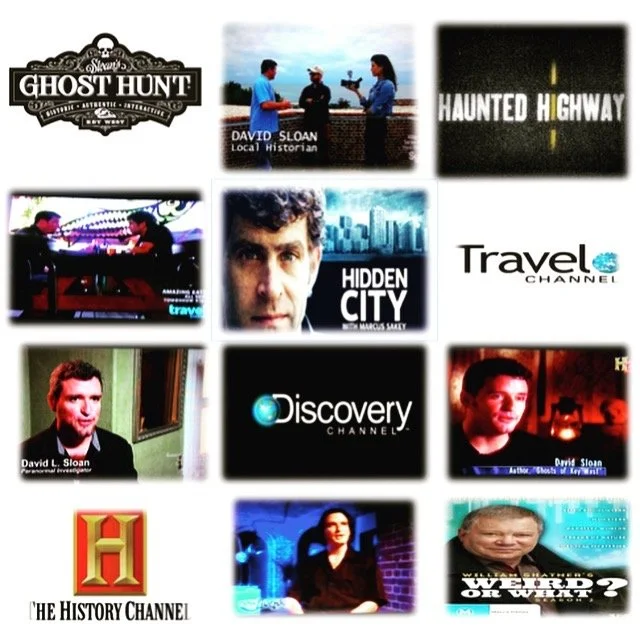
Selected television appearances and paranormal media work featuring David L. Sloan as Robert the Doll’s story reached audiences beyond Key West.
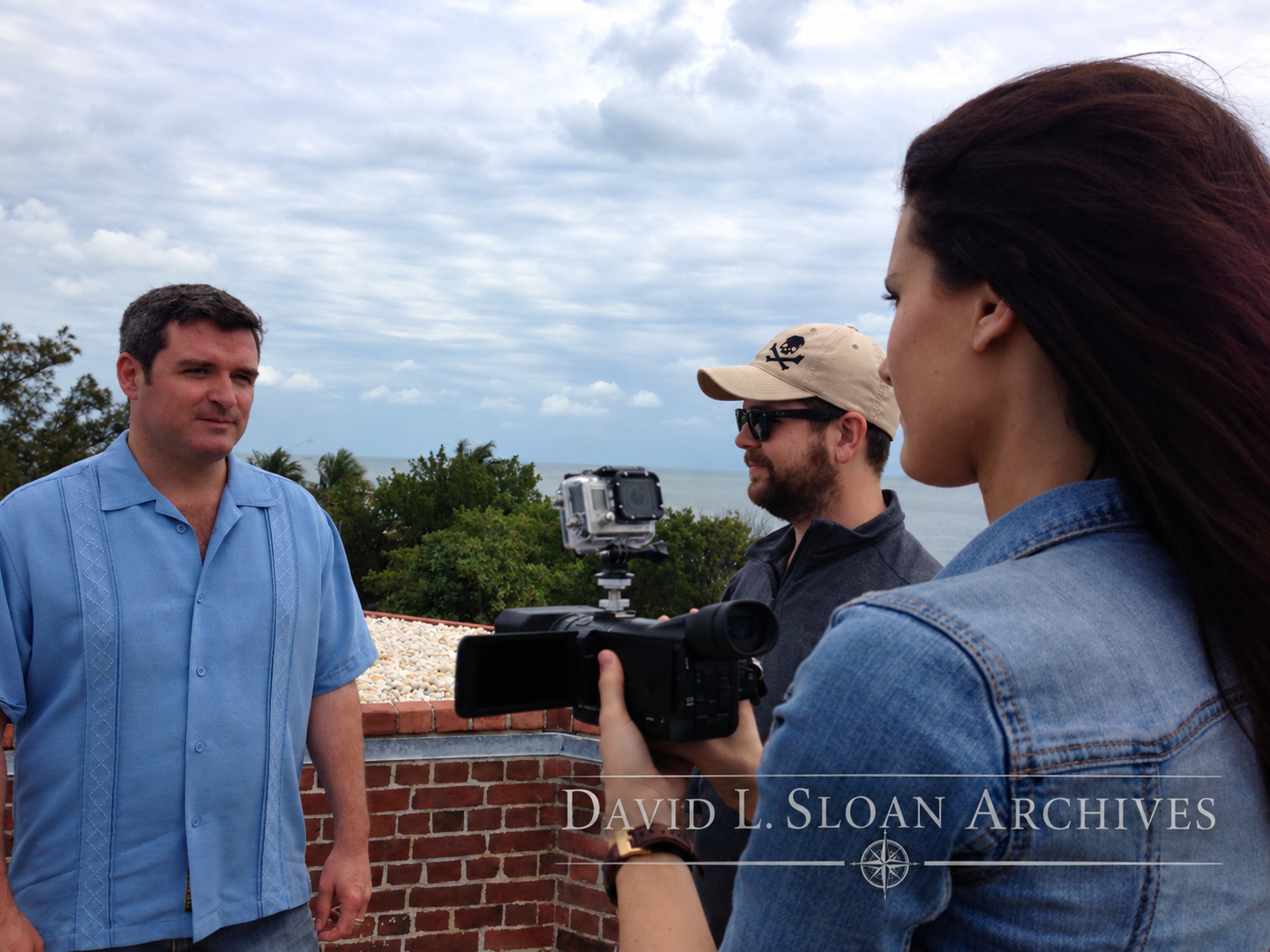
David L. Sloan during a 2013 filming at Fort East Martello. During the visit, Sloan shared Robert the Doll’s story with Jack Osbourne.
THE RESEARCH THAT REWROTE ROBERT’S HISTORY
UNCOVERING THE REAL ROBERT
At this point in Robert’s story, the history becomes personal.
When I began researching Robert the Doll in 1996, there was surprisingly little anyone could tell me about him with certainty. There were wonderful stories, of course. Key West had plenty of those. But when I started asking where the stories came from, who had actually known Gene Otto, or even who had made the doll, the answers became much harder to find.
I saw Robert come alive the first time I met him.
That experience set me on a mission to discover what made this doll tick.
One discovery led to another, and eventually to a vault at the local library, where I found a remarkable collection of Otto family photographs, papers, and correspondence that had sat largely unexplored for decades. Inside were pieces of Robert’s story I had spent years looking for.
There were photographs of Gene and Anne Otto that have since become familiar to anyone who has watched a documentary or read a story about Robert. I uncovered the first known photograph I could identify of Emmeline Abbott, the woman I now believe is behind the famous “angry nanny” legend. And there was one photograph that stopped me cold: a young Gene Otto dressed in the sailor suit that Robert would later wear.
Then came the letters.
Hundreds of pages of handwritten Otto family correspondence provided names, relationships, arguments, and seemingly insignificant details that began to explain stories that had survived for generations as folklore. Sometimes a single sentence in an old letter could suddenly give a century-old Robert legend a very real historical foundation.
And the archival record was only part of the investigation. I spoke extensively with Otto family members, friends, Key West residents, and people who had encountered Robert. Their memories filled the gaps in the documents and preserved pieces of the story that might otherwise have disappeared.
One of the biggest questions remained surprisingly basic:
Who made Robert?
No one knew.
My research eventually identified Robert as a Steiff doll manufactured in Germany. That discovery fundamentally changed his origin story. The familiar claim that an angry servant had handmade Robert as a voodoo doll simply could not be reconciled with the physical evidence.
Years later, I traveled to Giengen, Germany, home of the Steiff Company, to take that investigation back to Robert’s source.
In 2014, nearly two decades of research became Robert the Doll: The True Biography of Key West’s Haunted Doll. But publishing the book did not end the investigation. It gave me a foundation from which to keep digging.
Three decades after I first heard Robert’s story, I’m still finding things.
And some of the newest discoveries may be among the most important yet.
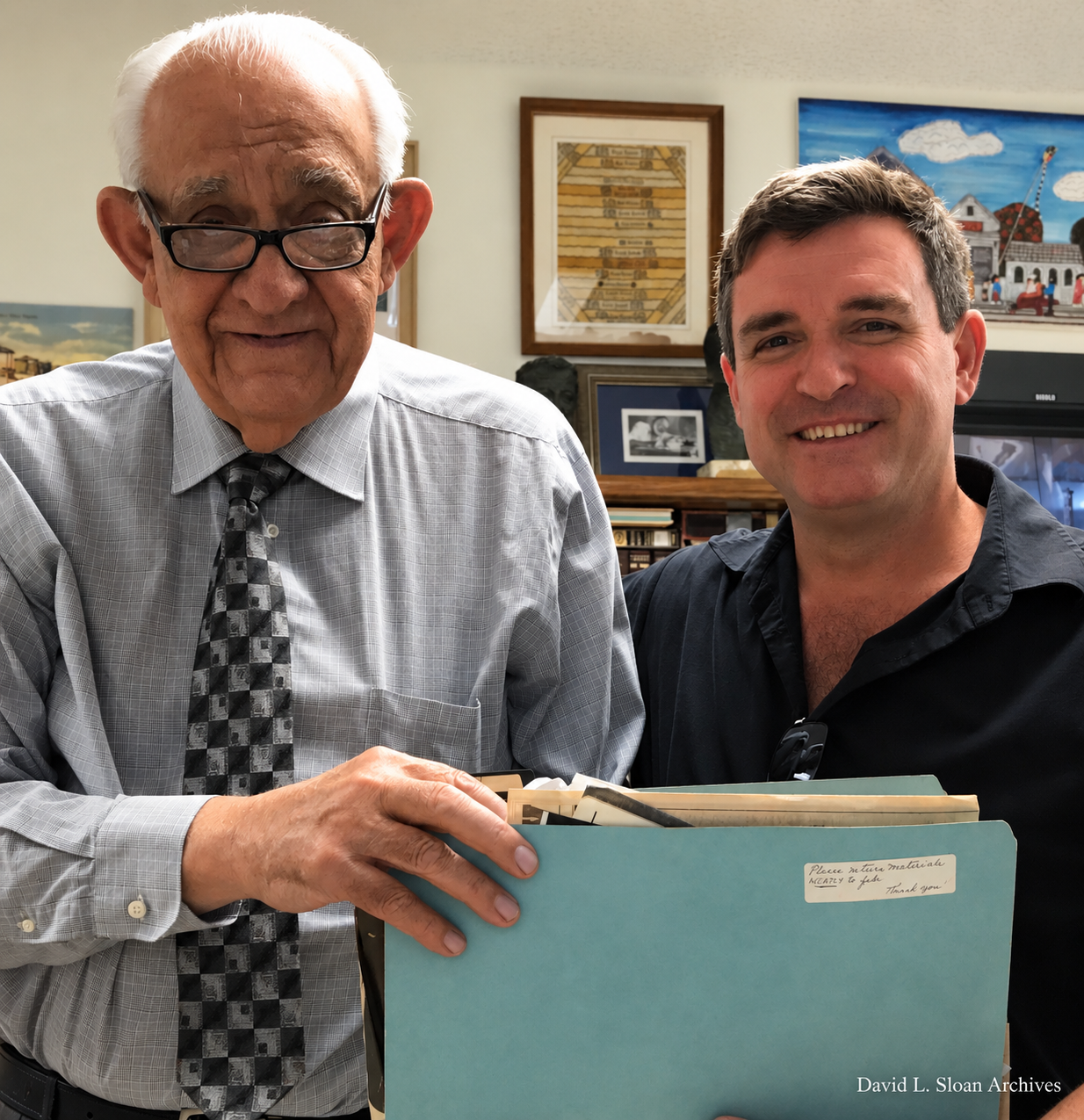
David L. Sloan with Key West historian Tom Hambright and materials from the Otto family archives. Hambright helped Sloan search the library’s walk-in archive vault for the long-rumored Otto family collection.
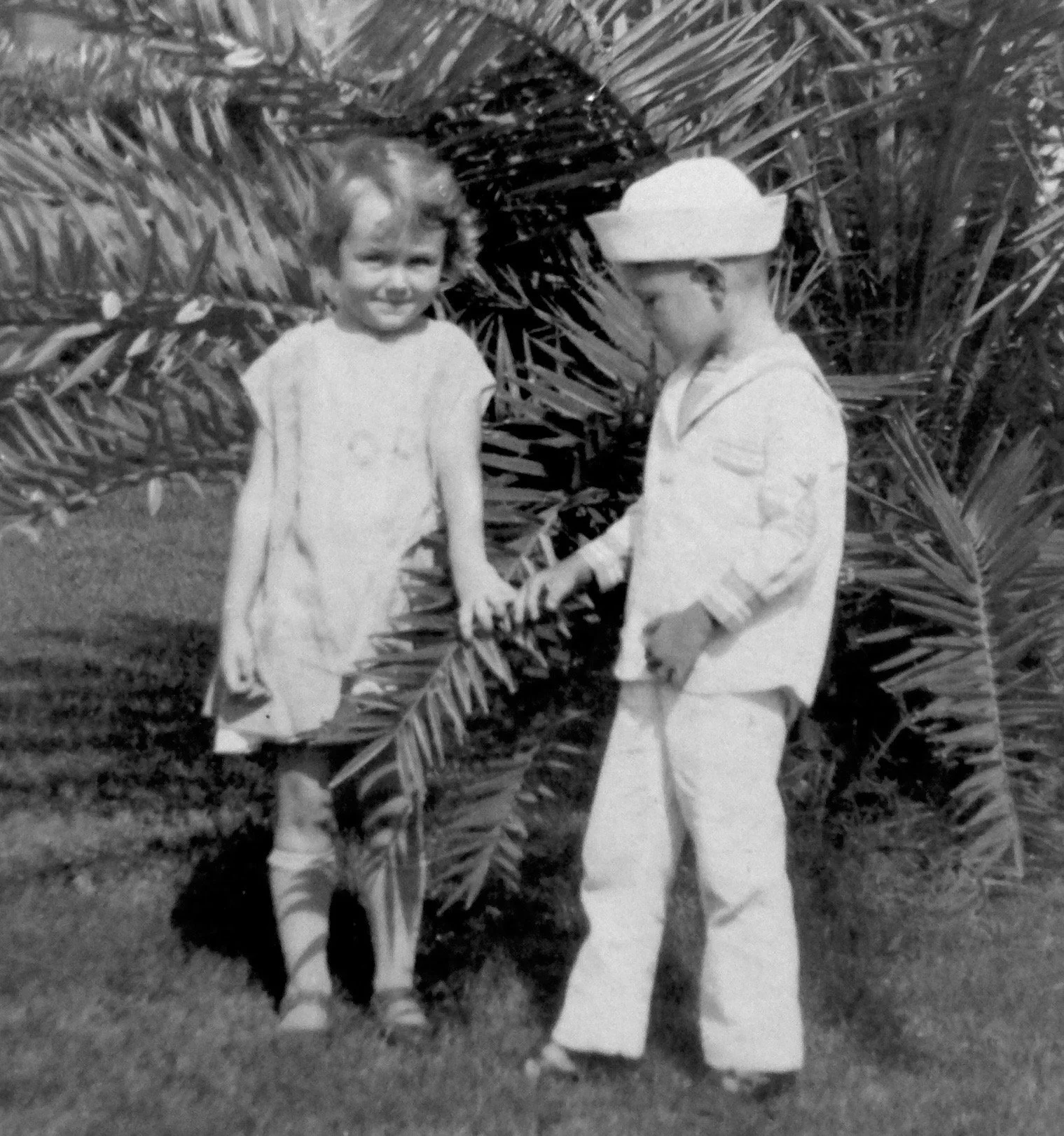
Gene Otto wearing the sailor suit now worn by Robert the Doll
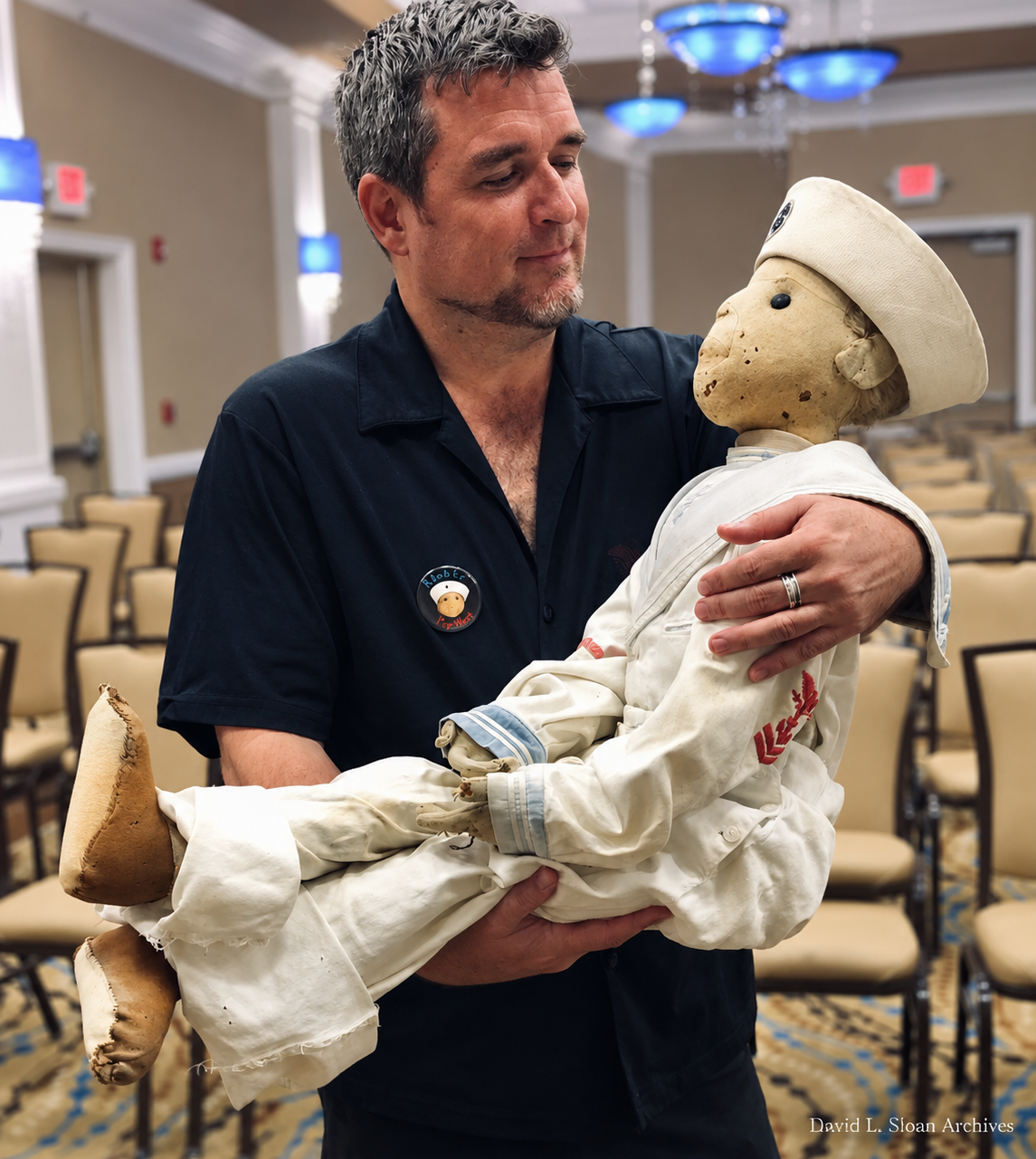
David Sloan holding Robert the Doll before the pair took the stage for a Halloween presentation in Islamorada, Florida.

Frequently Asked Questions About Robert The Doll
Robert’s story has inspired more than a century of questions, legends, and warnings. Here are answers to some of the things visitors ask most often, including what the historical record shows, what people have reported, and what remains unexplained.
-
Robert is a century-old Steiff doll once owned by Key West artist Robert Eugene “Gene” Otto.
Gene received Robert as a child and remained attached to him throughout much of his life. Stories that the doll moved, changed expression, and behaved strangely followed Robert through the Otto household, his later years with Myrtle Reuter, and eventually to Fort East Martello Museum, where he lives today.
Robert has since become one of the world’s best-known haunted objects.
-
That depends on what you believe.
Stories of unusual activity have followed Robert for generations. People have reported seeing him move, change expression, follow them with his eyes, and even appear to breathe. Visitors and paranormal investigators have also described unexplained experiences occurring around him.
After three decades of research and investigation, I believe genuine paranormal activity is associated with Robert. Exactly what that activity is remains an open question.
-
No single type of activity is associated with Robert.
People have reported his expression changing, his eyes appearing to follow them, and his position shifting from one moment to the next. During after-hours encounters, some guests have reported seeing movement in Robert’s chest that resembles breathing.
Others experience nothing visual at all but report unusual sounds, equipment responses, emotional reactions, or other unexplained activity while near him.
-
Robert’s reputation for causing bad luck is one of the most famous parts of his legend.
People have blamed Robert for accidents, broken relationships, lost jobs, travel problems, illness, and other misfortunes. Some later write to him asking for forgiveness and requesting that whatever they believe is happening to them stop.
No one can prove that Robert causes these events. The thousands of apology letters sent to him, however, are very real.
-
No evidence shows that simply seeing a photograph or video of Robert online causes bad luck.
The older curse stories center on people who believe they disrespected Robert. As his fame spread through television and social media, the legend expanded, and some people began worrying that merely seeing, photographing, or sharing his image could attract his attention.
I have found no historical basis for that belief.
You do not need to apologize to Robert simply because his picture appeared on your screen.
-
People say “I’m sorry, Robert” because of the belief that Robert can bring misfortune to people who disrespect him.
Visitors who later experience bad luck sometimes write to Robert asking for forgiveness. The letters describe everything from travel problems and accidents to relationship troubles, financial problems, and illness.
Over time, “I’m sorry, Robert” has also become part of Robert’s online folklore. But the apology letters predate the social-media trend and remain among the strangest physical records of his continuing legend.
-
No.
The idea that visitors must ask Robert’s permission before photographing him is a relatively modern addition to the legend. I have found no historical evidence that Gene Otto, Myrtle Reuter, or Robert’s early caretakers followed such a rule.
Respect is never a bad idea, but you don’t need Robert’s permission to photograph him.
-
Robert lives at Fort East Martello Museum in Key West, Florida.
Myrtle Reuter donated him to the museum in 1994, and Robert has been associated with Fort East Martello ever since.
Visitors can see him during regular museum hours and experience him after hours through Robert the Doll After Dark.
-
There is no documented evidence that Robert directly inspired Chucky from the Child’s Play movies.
The comparison is understandable. Both stories involve dolls associated with a supernatural presence, and Robert’s legend predates Chucky by many decades.
But Robert’s story developed independently, and claims that Chucky was specifically based on Robert are another later addition to the folklore.
The creator of Child’s Play has stated that Chucky was inspired by Cabbage Patch Kids and blatant consumerism.
-
People worldwide send letters directly to Robert at Fort East Martello Museum in Key West.
Many are apologies. Others ask for help, share personal stories, thank Robert, or simply want to communicate with him.
Address correspondence to:
Robert the Doll, c/o Fort East Martello Museum. 3501 S. Roosevelt Blvd., Key West, Florida 33040.
-
You can visit Robert during regular museum hours at the Fort East Martello Museum in Key West.
For a very different experience, Robert the Doll After Dark takes place after the museum closes and includes time with Robert inside the fort at night.
Sources & Further Reading
The Records Behind Robert’s Story
When I began researching Robert in 1996, no extensive published history of the doll existed. The story had survived through a small number of written accounts, memories of people who knew the Otto and Reuter families, museum staff, and fragments preserved in local newspapers.
Those early sources became the starting point for my investigation.
FOUNDATIONAL SOURCES
Arthur Myers, A Ghost Hunter’s Guide
One of the earliest written sources I found that includes Robert’s story and an important starting point for understanding the folklore as it existed before my research.
Darryl Meyers
Longtime owner of the former Otto home at 534 Eaton Street. Interviews with Meyers provided information about the house, Robert’s history there, and stories associated with the property.
Bill Gaiser
Neighbor and family friend of the Ottos whose firsthand recollections helped preserve details about Gene Otto, the family, and Robert.
Dorothy Reuter Kirkpatrick
A member of the Reuter family who provided valuable information about Myrtle Reuter and Robert’s years after the Otto era.
Annette Shaw
A niece of the Otto family whose family knowledge helped provide context for Gene and Anne Otto and their history.
ARCHIVES & HISTORICAL RECORDS
Otto Family Papers, Photographs & Correspondence
Discovering the Otto family collection in the local library archives transformed my research. Hundreds of handwritten letters, family photographs, papers, and other materials provided names, relationships, disputes, and details that helped connect Robert’s folklore to documented history.
The Key West Citizen and Miami Herald
Earlier newspaper stories occasionally preserved fragments of Robert’s history and local legend, providing useful contemporary reference points.
INSTITUTIONAL & MANUFACTURER RESEARCH
Steiff Company, Giengen, Germany
Research with the Steiff Company confirmed my identification of Robert as a Steiff doll manufactured in Germany, correcting the long-repeated story that he had been handmade in Key West.
Key West Art & Historical Society
Interviews with former staff members and museum records provided information about Myrtle Reuter’s donation of Robert, his early years at Fort East Martello, and the beginning of his public display.
THE RESEARCH CONTINUES
These sources became the foundation for three decades of interviews, archival investigation, historical research, and paranormal observation that resulted in Robert the Doll: The True Biography of Key West’s Haunted Doll and the ongoing research presented on this page.
Much of the material about Robert published later appeared after this research began circulating through books, television, tours, interviews, and the museum itself. For that reason, later articles and programs help document the growth of Robert’s modern legend, but the earlier sources and archival records above remain the foundation for reconstructing his history.
Robert’s story is still being researched. New documents, photographs, family connections, and firsthand accounts continue to change what we know about him. (Last updated September 2026)
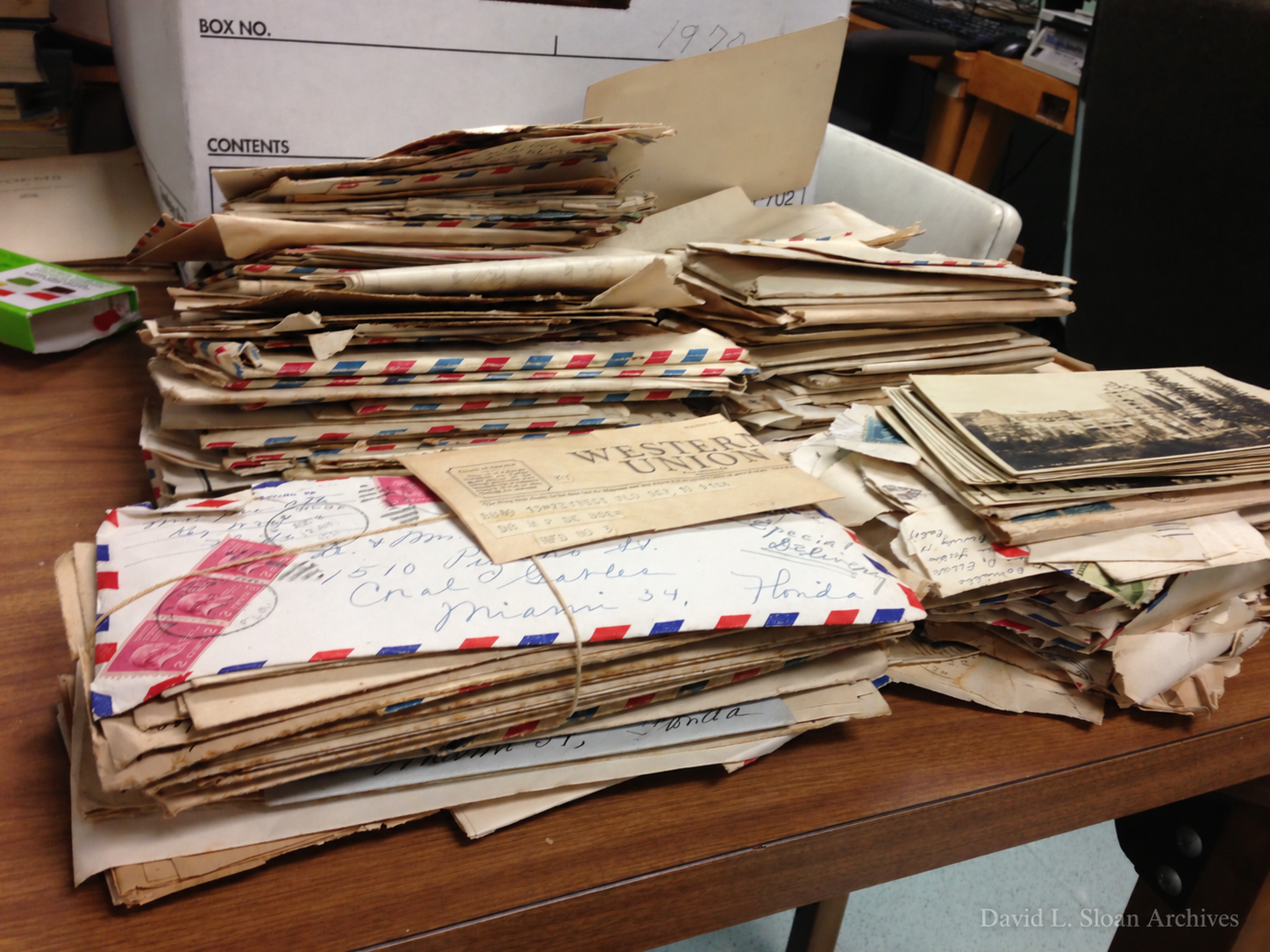
Part of the Otto family archive discovered during David L. Sloan’s research, including letters, photographs, and materials that helped reconstruct Robert the Doll’s true history.
David L. Sloan with Key West historian Tom Hambright and materials from the Otto family archives.
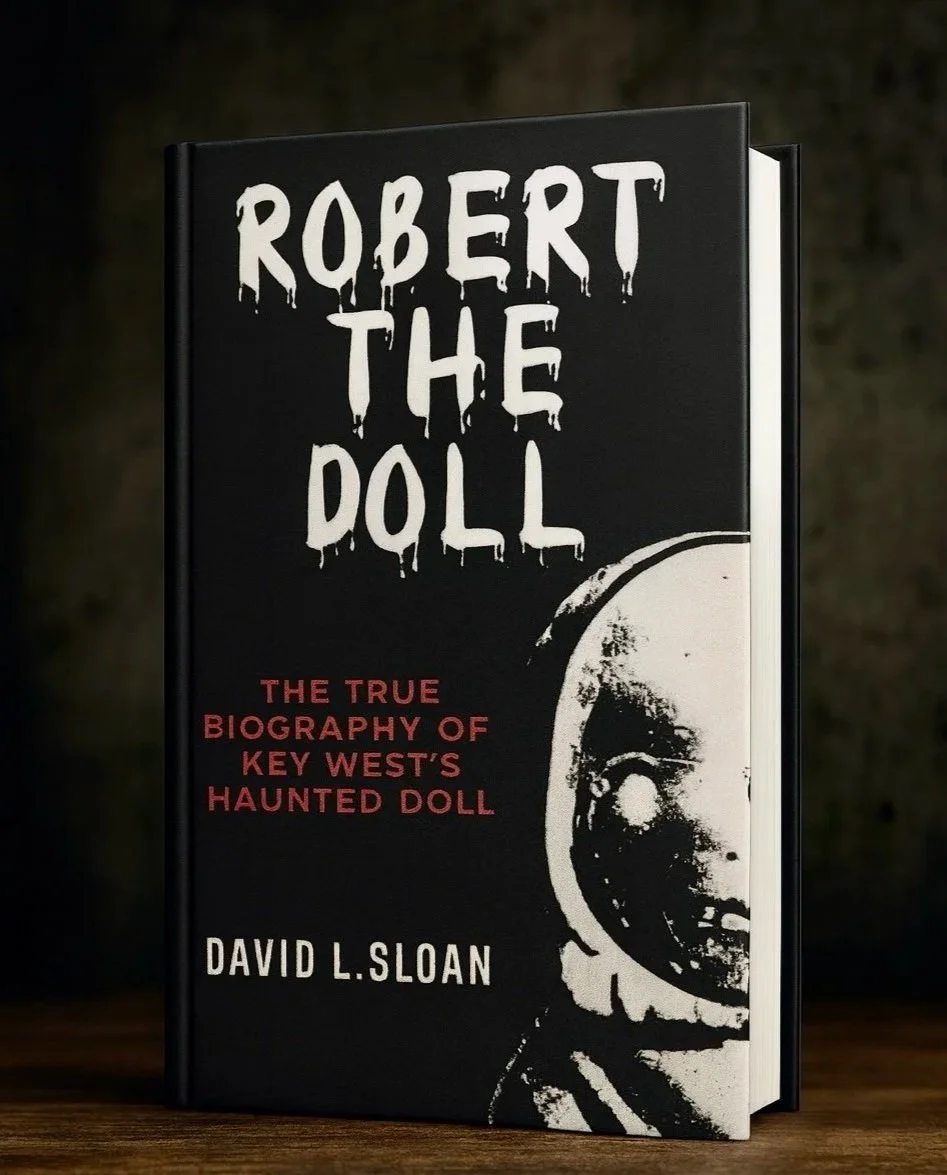
David L. Sloan’s 2014 book, Robert the Doll: The True Biography of Key West’s Haunted Doll, brought nearly two decades of research on Robert’s documented history into one volume.
YOU’VE READ THE STORY. NOW MEET ROBERT.
Experience Fort East Martello after the museum closes and encounter Robert for yourself.